Patrick and Tee-J’s homelessness
Dark Lies the IslandPatrick and Tee-J’s homelessness is a prolonged state of unstable shelter that shapes the brothers’ movements, choices, and diminishing prospects. A temporary apartment overlooking the Shannon briefly offers warmth and privacy; after they lose it, the White Hitachi becomes home, and their search for somewhere to stay carries them through camps, casual work, and nights in lay-bys. The contrast between those fleeting comforts and the van’s eventual mechanical trouble makes homelessness an ongoing condition rather than a problem resolved by one change of address.
Temporary Shelter and Its Loss
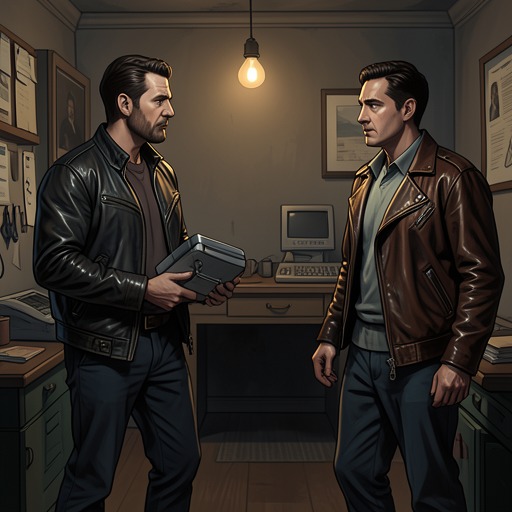
For a stretch, Patrick has Tee-J set up in a bedroom in an executive apartment overlooking the Shannon. The brothers are not entitled to the apartment: Patrick gained entry by way of the balcony, and they know the place is not theirs. Still, its scale and fittings—about 750 square feet, French doors opening onto a balcony, an extractor hood, a power shower, and underfloor heating—make it feel like an unusually secure interval. Tee-J has one bedroom, Patrick the other, and Patrick lies spread across the middle of his bed as if claiming a freedom he cannot formally claim.
The apartment’s abandoned swimsuit becomes an uneasy detail in this borrowed domesticity. The garment has been left on the balcony and stiffened by dried river slime; Tee-J repeatedly takes it back out of the pedal bin. Patrick notices the boy’s fascination but cannot name what troubles him about it. The detail does not make the apartment theirs. Rather, their access to it remains provisional, marked by somebody else’s forgotten possessions and by the fact that they entered from outside.
In November, with the complex empty, the brothers enjoy a run of box sets, pizza every night, and heating turned full blast. The comfort is real but temporary. Ukrainians arrive carrying tyre irons, and Tee-J is ready to confront them, while Patrick judges that fighting would achieve nothing. The apartment ends as shelter, and the brothers return to living in the White Hitachi. The sequence—from balcony entry to warm, furnished rooms to departure under threat—shows how quickly apparent stability can vanish when they have no secure claim to a place.
Life on the Road
Once back in the van, the brothers drive to quiet places through the winter. Their movements are not a settled journey toward a new home: each stop offers only a possible pause. Near Boyle, they drive into the hills and visit the caves at Keash, where a tourist sign tells them that a high king of Connaught was raised and cared for by she-wolves. They consider the caves as a place to stay, but the idea comes to nothing. Their mobility leaves them able to try another location, not able to turn a brief refuge into security.
Instead, they spend time at a crustie camp outside Manorhamilton. Mushrooms are shared there, but the stay grows difficult when Tee-J has apparitions of their dead mother. Another dispute begins after Patrick misreads a woman’s interest and makes an unwanted advance; the resulting row involves a crowbar, a man from Gloucester, and a three-legged pitbull. The camp is another stop that cannot provide lasting shelter or uncomplicated safety, and the brothers leave it behind.
They travel east to Longford and take work from a farmer who can no longer drive fence posts because of a shaking illness. The brothers last three days at the job. The work is brief, and nothing in the episode suggests it leads to a home or durable support. Patrick’s and Tee-J’s choices are constrained by immediate survival: they move on when a place or opportunity fails, but movement itself does not end their insecurity.
The Material Meaning of Shelter
The practical barriers to housing sharpen the brothers’ predicament. They cannot receive rent allowance without an address from which to claim it. A social-services worker tells them of a caravan park in Sligo that accepts temporary residents throughout the year, but Patrick resists the prospect, asking whether they look like tinkers. The exchange sets a formal obstacle beside a personal one: assistance depends on having an address, while the available alternative carries a stigma Patrick refuses to accept.
A coffee shop in Carrick gives Patrick a fleeting measure of what a home might mean. Sleeping in lay-bys and in the Hitachi, he has experienced the van’s walls giving way and returning when the wind rises. In the café, he is struck by the solidity of the walls and pats them. The gesture makes shelter concrete: not comfort as an abstraction, but a boundary that holds its shape against the weather. The brothers’ homelessness is registered through the contrast between those dependable walls and a vehicle that cannot offer the same protection.
Even the van’s condition becomes part of the brothers’ housing crisis. By the time Patrick assesses their situation, the White Hitachi is firmly immobilized, and its choking engine sounds suggest another threat to their mobility. He still believes it could be completely sound if he repairs its exhaust. That hope is practical and narrow, focused on keeping their remaining refuge usable, while the wider problems—no roof, stress, chest pains, and Tee-J’s likelihood of further fights—remain unresolved. The vehicle is at once shelter and liability: if it cannot move or run reliably, the brothers lose not only transport but the place they have been living.
Consequences and Narrative Significance
Homelessness places the brothers’ relationship under pressure without making them independent of one another. Patrick tries to look after Tee-J, remembers the apartment as a golden period, and believes that keeping his brother on a straighter path would count as doing well by him. Yet their shared circumstances repeatedly draw them into risky decisions and unstable settings. Patrick’s protective intentions coexist with the limits imposed by their lack of a home, income, and secure prospects.
The account also links deprivation to a scattered geography of access and exclusion: an apartment they enter by its balcony, a van parked in quiet places, a camp beyond Manorhamilton, casual labour in Longford, and a social-service referral that cannot overcome the address requirement. These locations are connected less by a route to safety than by the brothers’ need to find the next place to stop. Their homelessness makes movement necessary while ensuring that movement alone cannot provide belonging or permanence.
By the time Patrick considers the van’s failing exhaust, the strain has accumulated across several parts of life. He faces possible arrest, mounting stress and chest pains, and the absence of a roof; Tee-J remains at risk of getting into fights. Patrick nevertheless measures hope against whether the Hitachi can be repaired. The ending leaves the brothers’ housing insecure and their prospects unsettled, with the van’s uncertain operation standing for the thin, improvised shelter on which their survival depends.